Case Story
Rohini Tiru

Rohini Tiru

Pelol, Murhu, Khunti

Women Entrepreneur in Clean Energy Business

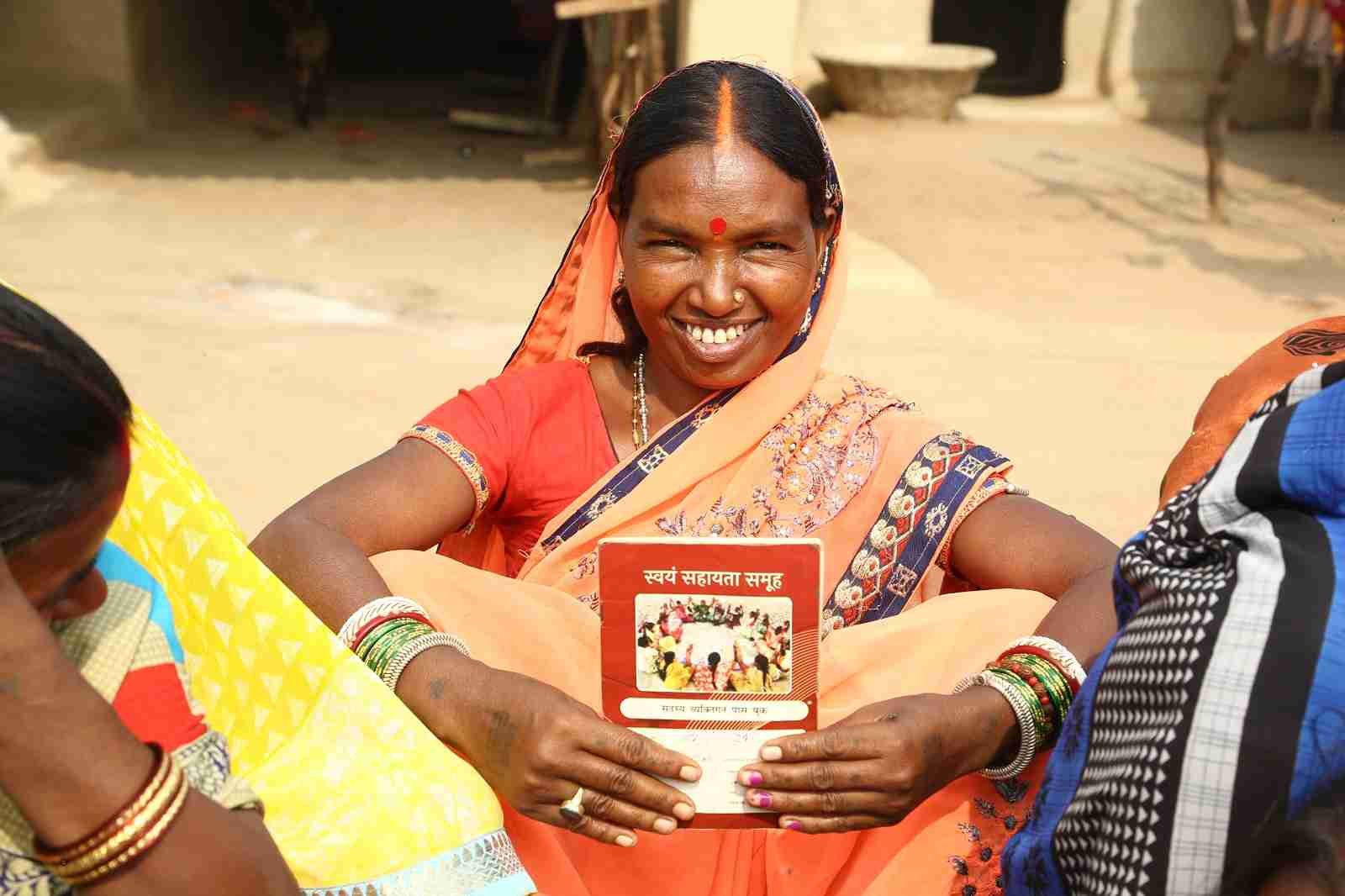
Background: Rohini Tiru was a homemaker and was unable to contribute financially to her family's income. The family mainly depended on agriculture, which generated only limited earnings. While returning from an SHG meeting, she met LEADS staff working under the RACE Project and learned about an entrepreneurship training programme. She participated in the training and gained practical business and technical knowledge.

After completing the training, Rohini purchased a clean energy-based wheat grinding and paddy dehusking machine with support from her SHG members. Today she earns approximately ₹500–₹600 per day through these services. This income helps meet her household expenses while also enabling her to repay the machine instalments.

She expressed her sincere gratitude to the LEADS RACE Project team for their guidance and support. Her entrepreneurial journey has become an inspiration for many women in her village to pursue sustainable livelihoods through clean energy-based enterprises.

Key Learning

Money alone does not guarantee success. Self-motivation, dedication, perseverance, and the willingness to learn can transform opportunities into sustainable livelihoods.
Case Story
Rohini Tiru

Jagru Pahan

Mahil, Hassa Panchayat, Murhu, Khunti

Irrigation through the Help of Solar Water Pump and Its Advantages

Background: Background: Mahil is a small village in Murhu Block of Khunti District of Jharkhand State, India. It comes under Hassa Panchayat, located 9 KM towards the south of the District headquarters, Khunti. The farmers generally rely on diesel-run pumps or pumps run by electricity. The condition of irrigation is not proper in Jharkhand, so the farmers face huge losses.

LEADS Intervention: Under the RACE project, the farmers of Mahil village are using a solar pump that runs with the help of solar panels, which is pollution-free, and since production has increased, income has also increased. Mr. Jagru Pahan, who is the beneficiary of the solar water pump, attended the VCEC meeting organized by LEADS, where he acquired full knowledge on the operation and maintenance of the solar water pump. Training was provided to the farmers on how to start the pump, its operation, and maintenance, along with the benefits of solar water and its repair. After several follow-ups, the application was passed and the solar water pump was installed on the farm of Jagru Pahan.

Changes: Since he started using the solar water pump that runs with the help of solar panels, it has benefitted him greatly. The cost of electricity bills and diesel has reduced, and at night, when there is no power, he utilises solar power for operating lights. Apart from that, he now cultivates two to three crops in one season, resulting in an increase in his income. He is growing several types of vegetables and crops like peas and tomatoes.

Key Learning

Solar-powered irrigation reduces dependence on diesel and electricity, cuts input costs, and enables multiple cropping seasons — turning a single intervention into lasting income growth for farming families.

Case Story
Malti Devi

Malti Devi

Budhangoda, Koh Panchayat, Petarwar

High Value Crop Changed the Life of Malti Devi

Background: With deteriorating economic conditions in rural India and increased interest in natural and sustainable living, many farmers are turning to high value crop farming to supplement their family's diet and uplift their economic conditions. Food grown through these cultivation practices is less cost intensive, and the grower can be sure of exactly what was used to grow it — an integration that forms the success mantra for sustainable agriculture. Keeping this in mind, the Project seeks to motivate the farming community in the intervention villages to practice high value crop cultivation by facilitating training programmes and providing support with seeds.

Her Story: 45-year-old Malti Devi lives in Budhangoda village of Koh Panchayat, Petarwar Block, with a family of 4 members. She was engaged in traditional seasonal cultivation practices, but the meagre income was never sufficient to meet her family's needs. Ultimately, it was through HRDP that they overcame their plight. During the course of interventions in her village, she enrolled for natural farming training and learnt the techniques.

The Intervention: She was supported with high value seeds such as bitter gourd, cucumber, and bottle gourd, and started cultivating these varieties on her 25 decimal of farm land.

The Change: Now, the yield of produce is 40 to 45 kg every day, earning a profit of ₹15,000–₹20,000 in a single season by selling these vegetables. She meets her family's needs and is investing in the education of both her children. Overwhelmed with joy and encouraged by her success, she is determined to continue the practice and has become a model progressive farmer.

In Her Words

"This will not only save me money but will also provide my family good nutritious food."

Case Story
Village Learning Centres

Village Learning Centres

Bandgaon Block, West Singhbhum

Village Learning Centers: Enabling Rural Children Access to Education During COVID Lockdown

Background: COVID-19 severely impacted the lives and livelihoods of the rural population. Children were among the worst affected, especially in rural and tribal areas. The subsequent closure of schools deprived children in rural areas of any access to formal education.

LEADS Intervention: With the support of ILP, LEADS initiated Village Learning Centres for class 1–5 children in Bandgaon block of West Singhbhum district. Educated youth from rural villages were engaged as education volunteers, also called Vidya Saathis. 46 Village Learning Centres were established with the support of these Vidya Saathis.

Capacity Building & Resources: The Vidya Saathis were provided training on teaching methodologies in foundational literacy and numeracy, and different learning resources were provided to the Village Learning Centres. Learning level assessments were conducted with children to assess improvement and gaps in language and numeracy.

Reach: During 2021–22, the Village Learning Centres reached more than 1,200 children with foundational learning support.

Impact at a Glance

46 Village Learning Centres, run by trained Vidya Saathis, kept foundational learning alive for 1,200+ rural children through the COVID-19 school closures.

Case Story
Dudhkundi Village AWC Building

Dudhkundi Village

Tebo Panchayat, Bandgaon

Community Makes Way for New AWC Building

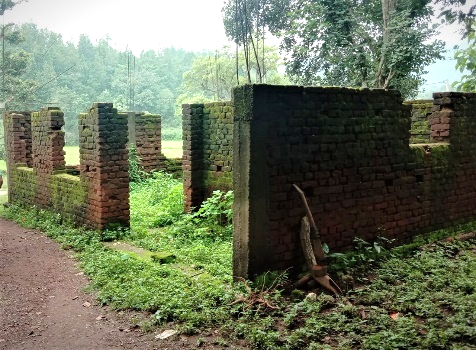
Background: Dudhkundi is a medium size village in Tebo Panchayat of Bandgaon block of Jharkhand. This tribally populated village has 76 households and a total population of 372, with 173 males and 199 females. The Anganwadi in the village caters to the needs of 71 children of the 0–6 age group. It was running from a rented space, and although construction for a dedicated Anganwadi building had been initiated, it was stopped before completion of the work.

LEADS Intervention: In the 2018–19 period, LEADS started working in Tebo Panchayat, and the field staff visited Dudhkundi village. They observed the incomplete construction and discussed this issue with the community members and the Anganwadi worker. In subsequent visits, the field staff participated in the traditional Gram Sabha meetings and highlighted this issue. The Gram Sabha also wanted the building and decided to demand it.

Community Action: LEADS field staff facilitated the community in making an application, which was later submitted to the CDPO office at Bandgaon. Some members of the village Gram Sabha also met the CDPO and urged her to look into the matter. The ICDS office then started official procedures for work initiation.

The Outcome: During the later stages of 2020, construction of the Anganwadi building restarted. It was completed in 2021 and handed over to the community.

Key Learning

It could never have been possible if the community had not responded — collective voice, raised through the Gram Sabha and sustained follow-up, turned a stalled construction into a completed Anganwadi.

Case Story
Suniti

Suniti (name changed)

Koderma District, Jharkhand

Suniti: A Story of Joy

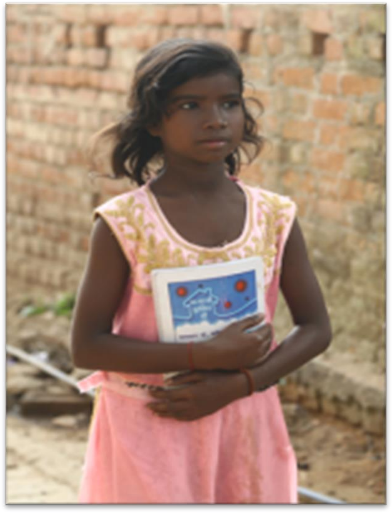
Background: Meet the always smiling Suniti (name changed) from Koderma district in Jharkhand. Her district was once known as the mica capital of India, but the enactment of the Forest Act imposed restrictions on mining in forest areas. Mica production soon became an underground economic activity, leading to the development of a black market where thousands of children like Suniti work under exploitative and harmful conditions to generate additional income for their families. As she started earning as a child, she lost interest in education and had stopped going to school. The situation worsened further during the pandemic as schools closed, and her regular life involved going to the mines with her family to collect mica scraps.

LEADS Intervention: The LEADS team sensitized her family about the importance of education in securing a bright future for the child. Consequently, she started coming to the bridge classes regularly, which aim to improve the learning standards of dropout and irregular students and help them join regular school.

Her Transformation: Here, she also got the opportunity to play many sports and take part in several activities. She loves being part of all the activities in the bridge classes and is now a very active member of the children's group formed in her village. She was a very shy and quiet girl during the initial months; now she actively participates in all the activities and voices her concerns.

Looking Ahead: She aspires to become a teacher and has started sharing her learning in class. She believes that education is a fundamental right and that everyone should be entitled to it. In her journey, she continues to inspire others to pursue education and secure a happy present and a bright future.

In Her Words

"Thank you to everyone for bringing back the joy in my life."

Case Story
Christopher Mundu

Christopher Mundu

Tokad Village, Bandgaon, West Singhbhum

Christopher Gets Back to School

Background: Christopher Mundu, an 8-year-old boy from the Adivasi, Munda community, lives in Tokad village of Bandgaon block, West Singhbhum. He comes from a family with a poor economic background. In 2021, he was admitted to Grade 1 in UMS Timda; however, he was irregular from the beginning and soon dropped out of school. His parents, hailing from a poor and uneducated background, were little aware of the benefits of education and did not show any interest in getting him back to school.

LEADS Intervention: During an enrollment campaign, the project team of LEADS learned about Christopher's dropout case from the school. As part of the program, project staff visited his home and counselled his parents over a period of one year to send him back to school.

Bridging the Gap: After a gap of one year, he rejoined school but felt out of place, as he lagged behind in learning levels compared to his classmates. He was further assisted in bridging the knowledge gap and learning levels in relation to other children in the school. This allowed him to come at par with his classmates and gave him the self-confidence to attend school regularly.

Looking Ahead: He now wants to study further, as he aspires to become a police officer in the future. Christopher's story is a beacon of hope for many other children who drop out of school at a young age due to a lack of knowledge about the importance of education in securing a bright, respectable, and prosperous future.

Key Learning

Sustained, patient counselling of parents — followed by dedicated learning support for the child — can turn a year-long dropout into a confident, regular student with dreams for the future.

Case Story
Anu Kumari

Anu Kumari

Kuda Village, Kuda Panchayat, Murhu

Acquainting the Children with Adivasi Culture and Tradition

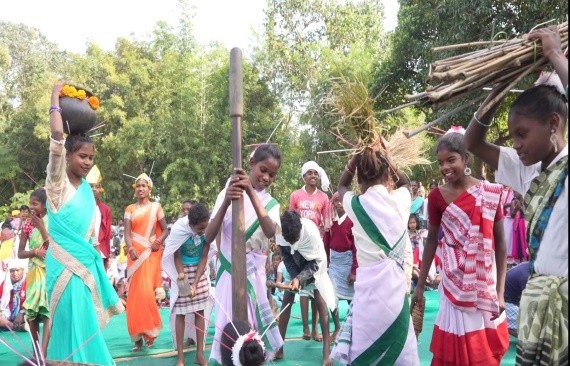
Background: Kuda Panchayat is in Murhu block, and Kuda village belongs to this panchayat, which has 7 villages in total. The village is located 30 km from the main road, and the major population belongs to the Munda community, an Adivasi group. The village has one school with an enrolment of 39 and only two teachers. Anu Kumari, who comes from an Adivasi family, studies in Class 3 of this school. On interaction with her, it came to the notice of the LEADS team that she had very little knowledge about her tradition and culture. Moreover, in the era of rapid globalization, existing cultural values were getting lost, especially among the younger generation and children, as they saw their own culture as inferior and outdated.

LEADS Intervention: Under the Adivasi project, LEADS is undertaking activities to generate awareness about various aspects of tribal traditions and culture, such as food, clothes, and ornaments, among children to acquaint them with their culture and develop a sense of pride and belongingness in them.

Anu's Journey: Through this intervention, Anu Kumari has not only learned about her culture but has also emerged as a leader, sharing her learnings with other children and community members.

The Ripple Effect: This has generated a genuine interest in the community in learning about the Adivasi culture, creating a sense of pride and belongingness, while also facilitating the restoration and preservation of Adivasi culture.

Key Learning

When children are helped to see their own culture as something to be proud of, they don't just preserve it — they become the ones who carry it forward for their whole community.

Case Story
Anu Kumari

UMS, Nagnagar

Govindpur Block, Dhanbad District

No More Absence from School During Periods – MHM Lab at UMS, Nagnagar

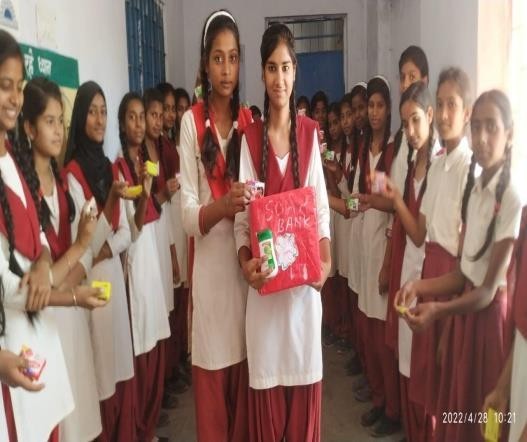
Background: The journey of the Menstrual Hygiene Management (MHM) Lab at Upgraded Middle School (UMS), Nagnagar, in Govindpur Block of Dhanbad District began with routine awareness sessions conducted by the UNICEF-supported LEADS team. During these discussions, it became evident that adolescent girls were hesitant to speak openly about menstruation. However, through continuous interaction and awareness activities, the students gradually became comfortable discussing menstrual hygiene and the challenges they faced. Many girls shared that they stayed away from school for three to four days every month due to the absence of proper menstrual hygiene facilities and support within the school.

LEADS Intervention: The LEADS team introduced the concept of an MHM Lab, explaining how it could provide a safe, hygienic, and supportive space for girls during menstruation. Students strongly supported the idea and discussed it with the school management. Since all classrooms were occupied, the students themselves suggested creating the MHM Lab by partitioning the school library. Appreciating this innovative idea, the school management utilized school funds to establish the MHM Lab.

Facilities Created: The MHM Lab was designed to ensure that girls no longer miss school during menstruation. It includes a comfortable bed for rest, a hot water bag for menstrual cramps, doctor-prescribed medicines for pain relief, a sanitary pad vending machine, a query box to address menstrual health concerns, informative IEC materials, and educational wall paintings created with the participation of both girls and boys. A peer group was also formed to facilitate regular awareness discussions among students.

Impact: The initiative has significantly reduced absenteeism among adolescent girls and created a positive environment where menstruation is openly discussed without hesitation. Students now feel confident seeking support during their periods, while teachers actively encourage menstrual hygiene awareness. The innovative use of limited school resources has inspired other schools to consider establishing similar MHM Labs.

Voices from the School: Kaushal Kumar, School In-charge, shared that it was the students who inspired the management to establish the MHM Lab despite space limitations. Raushan Aara, a Class VIII student and Pradhan Mantri of the school, expressed that the students unanimously wanted the lab because it would help them continue attending school during menstruation and discuss menstrual health freely both at school and at home.

Key Learning

"Where there is a will, there is a way." The MHM Lab demonstrates that with student participation, supportive school management, and community collaboration, even limited resources can create a safe and inclusive learning environment. Small innovations can bring lasting change by ensuring that no girl has to miss school because of menstruation.

Case Story
Anu Kumari

Village Learning Centres

Kolebira Block, Simdega District

Providing Fundamental Learning Support to Tribal Children

Background: The COVID-19 pandemic severely disrupted education across rural India, particularly in tribal regions such as Kolebira Block of Simdega District. With schools remaining closed for long periods, many children from economically weaker tribal families could not access online education due to the lack of smartphones, internet connectivity, and digital resources. This widened the learning gap between rural and urban children and caused many students to lose interest in formal education after schools reopened.

LEADS Intervention: To bridge the learning gap, LEADS, with the support of MCKS Trust, established Village Learning Centres in 25 villages for children studying in Classes I to V. Educated youth from the villages were selected and trained as Vidya Saathi (Education Volunteers) to provide foundational literacy and numeracy support using child-friendly teaching methodologies. The learning centres were equipped with educational resources, and regular learning assessments were conducted to identify gaps and monitor progress.

Impact: During the year 2022–23, the 25 Village Learning Centres supported more than 700 children with foundational learning. Assessment results revealed that over 80% of the children showed significant improvement in language and numeracy skills. The initiative successfully rekindled children's interest in education and encouraged them to continue their formal schooling with greater confidence.

Community Transformation: The Vidya Saathi model has emerged as a sustainable community-led education initiative that empowers local youth while ensuring quality foundational learning for tribal children. It has become a beacon of hope in reducing educational inequalities between rural and urban communities and between economically disadvantaged and privileged children.

Key Learning

Community participation, trained local youth, and timely learning support can effectively bridge educational gaps created by crises like COVID-19. Investing in foundational literacy and numeracy today creates confident learners and stronger communities for the future.

Case Story
Anu Kumari

Bande Village

Kodakel Panchayat, Murhu Block, Khunti

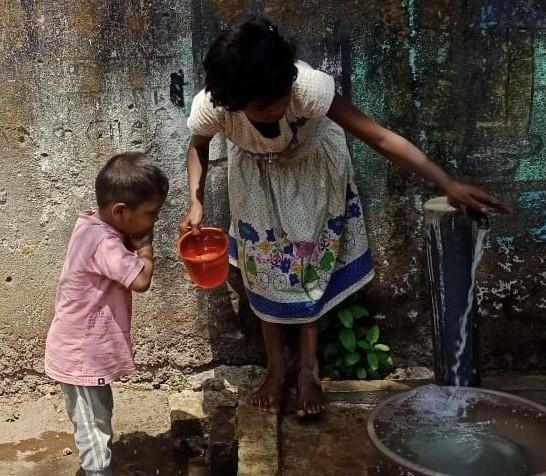
Solving the Drinking Water Problem at Bande Village's Anganwadi Centre

Background: Bande Village, located in Kodakel Panchayat of Murhu Block in Khunti District, faced a serious drinking water problem at its Anganwadi Centre. Although the village is situated just one kilometre from the block headquarters, the water pump installed near the Anganwadi Centre remained non-functional for a long time. Repeated repairs of the damaged pipeline failed to resolve the issue, creating major difficulties for Anganwadi workers and children who depended on the centre for safe drinking water every day.

LEADS Intervention: Recognizing the urgency of the problem, the LEADS project team coordinated with the local Jal Sahiya to identify a sustainable solution. After assessing the situation, Jal Sahiya contacted the contractor responsible for implementing the Jal Jeevan Mission. It was explained that a formal water connection could only be provided after obtaining approval from the Gram Sabha. To facilitate this process, LEADS organized a Gram Sabha meeting involving Jal Sahiya, Health Sahiya, Anganwadi workers, and village representatives.

Community Action: During the Gram Sabha meeting, all stakeholders unanimously agreed to provide a drinking water connection to the Anganwadi Centre under the Jal Jeevan Mission. Following the community's approval and coordination with the concerned authorities, the water connection was successfully installed, ensuring uninterrupted access to safe drinking water.

Impact: The installation of the drinking water connection has greatly improved the functioning of the Anganwadi Centre. Anganwadi workers and children now have access to clean and safe drinking water throughout the day, creating a healthier environment for early childhood care and education. The initiative also demonstrated the importance of community participation and convergence between local governance institutions and government schemes.

Key Learning

Strong community participation, effective coordination with local institutions, and timely convergence with government schemes like the Jal Jeevan Mission can successfully solve basic infrastructure challenges and improve the quality of services for children and communities.

Case Story
Anugrahit Mundu

Anugrahit Mundu

Godatoli Village, Godatoli Panchayat, Khunti

From Household Chores to a Steady Income: Anugrahit's Journey Through Skill Training

Background: Anugrahit Mundu, aged 20 years, comes from Godatoli Village of Godatoli Panchayat in Khunti District. There are seven members in her family. Her father is a farmer and her mother sells vegetables. With seven members to support, their financial condition was not very good, and it was very difficult for her parents to manage the family's needs.

LEADS Intervention: The District Facilitator (DF) of LEADS attended the Gram Sabhas in various communities across Panchayats of Khunti to orient the community on the project and its deliverables. During one such meeting, details about various government schemes, skill trainings, and the support provided by LEADS were shared. After the meeting, Anugrahit contacted the DF to get more information on the skill trainings. The DF visited her and explained the courses, duration, and other details.

Community Action: Knowing this, Anugrahit decided to enrol in the 60-day Machine Operator training conducted by Kalyan Gurukul and got admission. Prior to starting her training, she used to assist with household chores and work with her family members on farm and household tasks. After completing the course, Anugrahit is now employed with Minda Company.

Impact: Anugrahit now supports her family financially and sends money home every month, receiving honoraria beginning at ₹12,581/month. Her smile tells her story of change. Today, Anugrahit and her family members are very happy to share how much they benefited from the support of LEADS and its staff, who made her aware of skill trainings she had not known about earlier. Her journey has also motivated other youths in the village to learn employable skills that can help improve their income and standard of living.

Key Learning

Timely awareness of skill development opportunities, combined with community outreach and guidance from field facilitators, can help youth from financially constrained families gain employable skills, achieve financial independence, and inspire others in their community to do the same.

Case Story
Pushpa Devi

Pushpa Devi

Wife of Mr. Basudeo Yadav

Empowering Agriculture Transformation: Pushpa Devi's Journey from Traditional Farming to Sustainable Success

Background: Pushpa Devi, the wife of Mr. Basudeo Yadav, comes from a low-income household with limited access to education, healthcare, and treatment. As a stay-at-home wife, she relied on borrowing money from her SHG to cover her family's minor needs. She struggled to use her farmland for cultivation due to her lack of knowledge in contemporary agricultural methods.

LEADS Intervention: Pushpa attended the LIFE project at LEADS, where she learned about the project and its facilities, such as the revolving fund, the SRI method, and their advantages. She also participated in bookkeeping training and livelihood training, learning about new technology in farming and the distinction between chemical and organic fertilizers. Due to her family's low income, she needed to increase the family's income generation capacity and hoped to expand her agricultural knowledge, along with assistance in marketing to maximize market share for her farm and generate greater income.

Community Action: The organization educated recipients about tools for managing crops more effectively, including spades and water pumps, and offered training sessions on using contemporary methods. Field trips and interactions with other local farmers helped beneficiaries learn from one another and advance their farming practices. Pushpa was also granted a revolving fund of Rs. 750/- to help her with operations, along with a library of literature on sustainable farming and advanced agricultural approaches.

Impact: Pushpa can now provide a bigger and more consistent crop production. This has encouraged other women in the village to take up modern farming practices, which will help them increase their income and secure a better livelihood.

Key Learning

Access to structured training, small revolving funds, and peer learning through field interactions can help women farmers from low-income households adopt modern, sustainable agricultural practices and become confident contributors to their family's income.

Case Story
Karu Village

Karu Village

Champawa Panchayat, Bandgaon Block, West Singhbhum

Restoring the Community Chuan: Ensuring Safe Drinking Water for Karu Village

Background: Karu village is situated in Champawa Panchayat of Bandgaon Block in West Singhbhum and is home to 40 families. The members of the village are dependent on a community chuan for meeting their water needs for drinking and domestic purposes. Over time, the chuan had become dilapidated due to use and lack of maintenance. Since the surroundings of the chuan were dirty, water flowing into it during monsoon contaminated the water stored inside. Additionally, the two hand pumps installed in the village were dysfunctional, leaving the community entirely dependent on the chuan for their everyday water needs.

LEADS Intervention: As a result of the deteriorating chuan, the residents of Karu village became vulnerable to various water-borne diseases. The Gram Sabha initiated a meeting under the leadership of the Gram Pradhan, where it was decided that an application requesting the repair of the chuan should be submitted to LEADS. After receiving the application from the Gram Sabha, LEADS undertook the restoration of the chuan with the help of the community itself.

Impact: After restoration, the community gained access to clean drinking water and their vulnerability to water-borne diseases has reduced. Women no longer have to travel long distances for fetching water. The community expressed their gratitude, and their trust in LEADS as an organization has increased. The Gram Sabha now feels empowered and has expressed interest in taking up other developmental matters for the benefit of the community.

Key Learning

Community-led identification of problems, combined with timely support from local governance institutions like the Gram Sabha, can drive sustainable restoration of shared infrastructure and build lasting trust between communities and development organizations.

Scroll to Top